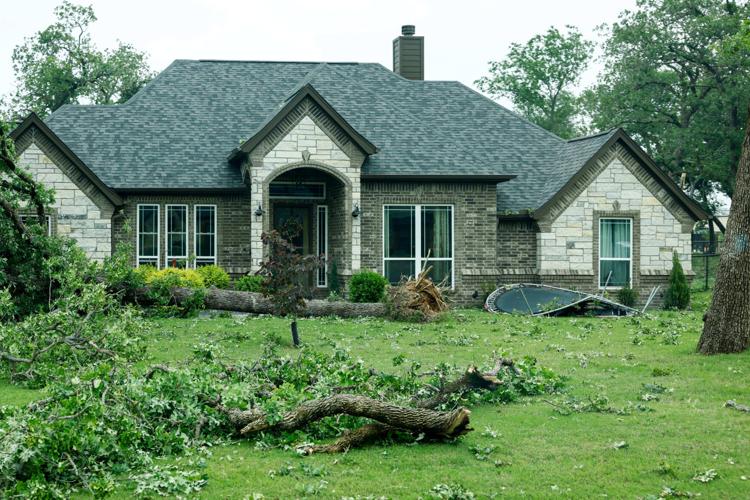
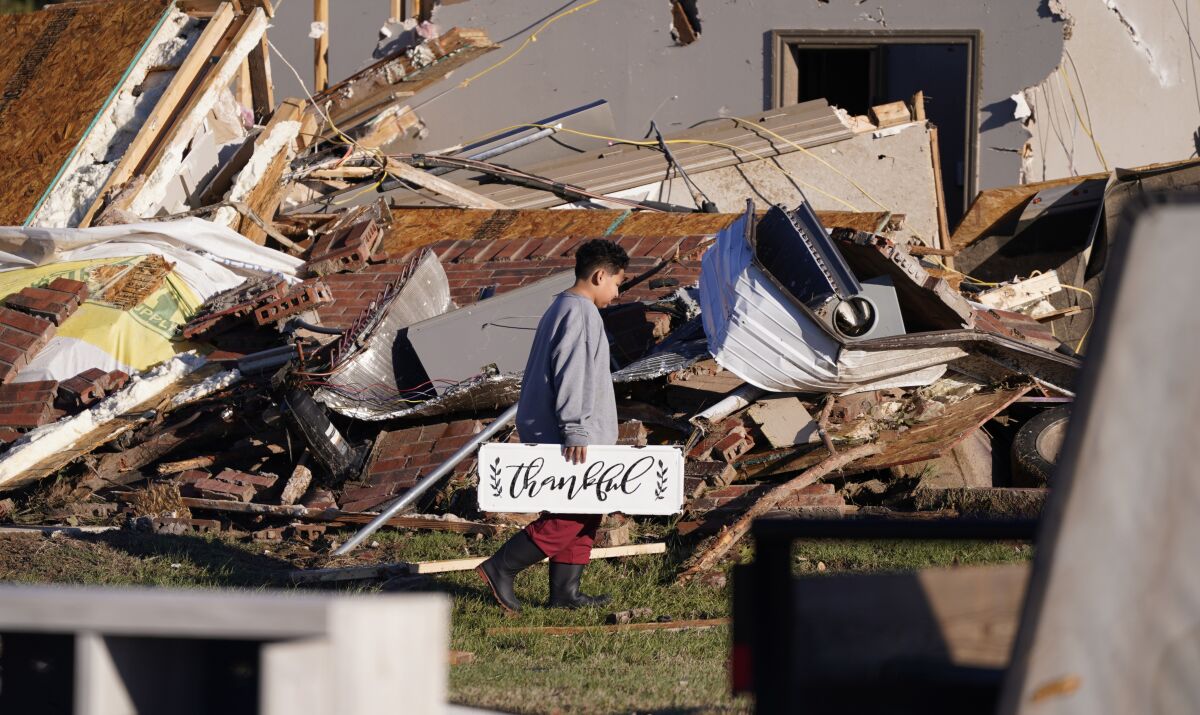
At least two people are dead after multiple tornadoes tore through northern Texas, obliterating homes, splitting communities, and leaving behind trails of rubble. The storms struck with little warning during the overnight hours, catching residents off guard in small towns and rural areas where infrastructure is fragile and emergency response limited.
This isn’t the first time northern Texas has faced violent spring storms—but the intensity and speed of this outbreak have shocked even seasoned meteorologists. The destruction stretches across several counties, with entire neighborhoods reduced to slabs and debris scattered for miles. As survivors emerge from storm shelters and damaged homes, the full scale of the disaster becomes clearer by the hour.
Deadly Twisters Touch Down Across Multiple Counties
The tornadoes formed during a fast-moving supercell system that moved across the Red River region late Tuesday night. National Weather Service (NWS) storm surveys confirmed at least three separate tornado touchdowns in Cooke, Montague, and Clay counties, with one rated likely EF-3 based on preliminary damage assessments.
In Cooke County, near the town of Muenster, a tornado carved a path over 12 miles long and up to 800 yards wide. Homes were completely swept from their foundations, vehicles tossed like toys, and power poles snapped in half. Local emergency officials confirmed two fatalities in the area, both involving mobile homes that were destroyed. One victim was found more than 200 yards from where their residence once stood.
“This was not a glancing blow,” said a Cooke County emergency coordinator. “This was a direct hit on residential areas that had no reinforced shelters. People had minutes, if that, to react.”
Montague County saw similar devastation, with widespread tree damage, downed power lines, and several farm structures flattened. No fatalities were reported there, but at least five people were injured, two critically, after being trapped beneath collapsed roofs.
Why Northern Texas Was Especially Vulnerable
Northern Texas sits in a volatile stretch of what’s informally called “Tornado Alley Lite”—a zone less famous than Oklahoma or central Kansas but just as prone to violent springtime outbreaks. Geography plays a major role: warm, moist air from the Gulf of Mexico collides with dry, cooler air sweeping down from the Rockies, creating the perfect recipe for rotating thunderstorms.
But vulnerability goes beyond weather patterns.
Many homes in the affected areas were older constructions, not built to withstand EF-2 or higher winds. Mobile homes, which account for roughly 15% of housing in rural North Texas, are especially at risk. According to FEMA, mobile homes make up less than 10% of U.S. housing but account for nearly half of tornado-related deaths.
“We’ve seen this pattern repeat,” said a regional NWS meteorologist. “When a tornado hits a subdivision with stick-built homes, people survive in basements or interior rooms. When it hits a mobile home park, the outcome is often tragic.”
Compounding the danger: sparse access to underground shelters. In cities like Dallas or Fort Worth, public storm shelters and reinforced community centers are more common. In towns like Muenster or Saint Jo, they’re virtually nonexistent. Residents rely on bathrooms, closets, or ditches—options that offer limited protection against violent twisters.
Firsthand Accounts: Surviving the Night
Survivors describe a night of terror and chaos.
Linda Reeves, 62, lives on the edge of Muenster. Her brick home lost its roof and one entire wall, but she and her two grandchildren survived by sheltering in a bathtub wrapped in mattresses.
“We heard this freight-train roar,” she said. “Then everything started shaking. I grabbed the kids and we got into the bathroom just as the ceiling caved in. Glass and wood were flying. I thought we weren’t going to make it.”
Her neighbor’s double-wide mobile home, 100 yards away, was completely destroyed. The owner, a retired mechanic, was killed instantly.
In Saint Jo, a volunteer firefighter described pulling a teenager from the wreckage of a shed where he’d taken cover after his house collapsed. “He was conscious, bleeding, but alive. We didn’t have power, no lights, just flashlights and hands digging through debris. That’s how we work out here.”
These stories underscore a grim reality: when tornadoes strike rural areas, survival often depends on luck, location, and how quickly neighbors respond before official help arrives.
Emergency Response: Rescue, Recovery, and Roadblocks
Within hours of the storms passing, search and rescue teams mobilized. Texas Task Force 1 deployed urban search specialists, K-9 units, and drone operators to assist local crews. National Guard units are on standby, though full deployment awaits formal state activation.
Challenges are mounting.
Power remains out for over 18,000 customers across the three hardest-hit counties. Cell service is spotty, complicating coordination. Roads are blocked by downed trees, power lines, and structural debris, slowing response vehicles.
“We’re operating on adrenaline right now,” said a volunteer EMT from Gainesville. “We’ve got generators running at the makeshift triage center, but fuel is running low. Supplies are coming in, but not fast enough.”
Damage assessments are ongoing, but early estimates suggest at least 120 homes were destroyed and another 300 severely damaged. The American Red Cross has opened two emergency shelters—one at a high school gym in Bowie and another at a community center in Archer City.
Federal assistance is expected, though applications for Individual Assistance and Public Assistance through FEMA won’t be available until a presidential disaster declaration is issued—a process that could take days.
Long-Term Recovery: What Comes
After the Headlines Fade
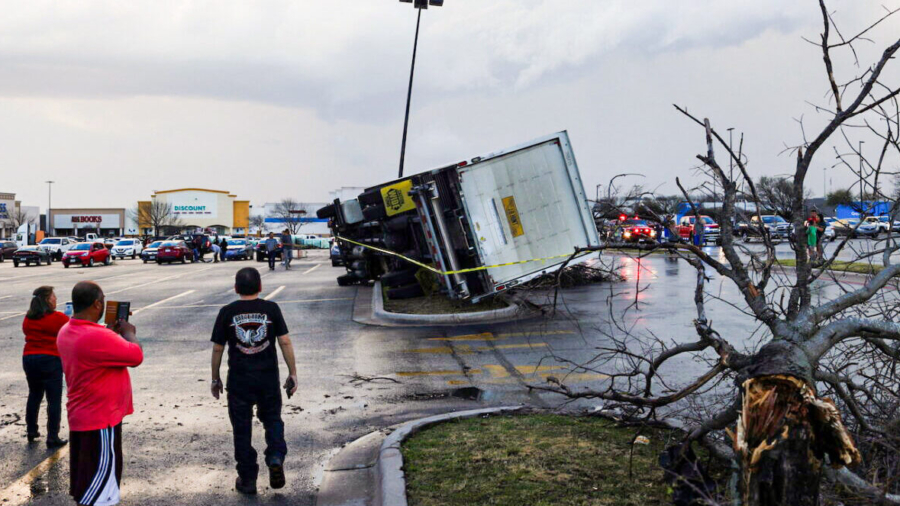
Media attention will shift. But for those who lost everything, the real work begins now.
Rebuilding homes is only part of the equation. Survivors face emotional trauma, insurance battles, and months—if not years—of uncertainty. Many rural residents are underinsured or lack tornado-specific coverage, assuming they’re not in high-risk zones.
“We keep hearing ‘it won’t happen here,’” said a local insurance agent in Decatur. “Then it does. And people find out their policy doesn’t cover debris removal or temporary housing the way they thought.”
Nonprofits like Team Rubicon and All Hands and Hearts typically step in during these phases, helping clear debris and repair homes. But volunteer mobilization takes time.
Longer-term, experts urge communities to invest in resilience:
- Build or retrofit storm shelters in schools and community centers
- Expand early warning systems (outdoor sirens, emergency alerts)
- Encourage stronger building codes, even for non-urban areas
- Educate residents on where and how to shelter
“One tornado should not erase a town,” said a disaster recovery planner who worked post-Joplin in Missouri. “But without preparation, that’s exactly what happens.”
How to Help: Support That Actually Matters
If you’re looking to assist, focus on verified channels.
Unsolicited donations—especially clothes or food sent directly to disaster zones—often clog supply chains and create more work for volunteers. Instead, consider:
- Financial contributions to vetted organizations like the Red Cross, Salvation Army, or Texas Emergency Management Council
- Volunteer through established groups like SBP or Habitat for Humanity, which coordinate rebuild efforts
- Support local mutual aid networks—many communities set up GoFundMe campaigns for specific families
- Donate blood—regional blood banks often see shortages after disasters
Avoid “disaster tourism.” Showing up uninvited to help can interfere with official operations and put you at risk.
What’s Next: Forecast and Preparedness
The immediate threat has passed, but meteorologists warn the storm pattern isn’t done.
A new cold front is expected to sweep through the Southern Plains in the coming week, raising the risk of additional severe weather. While northern Texas may not face another outbreak of this magnitude, even isolated tornadoes can be deadly without warning.
Residents are urged to:
- Keep weather radios charged and apps updated
- Know your safe place—basement, interior room, storm shelter
- Have a communication plan for family members
- Review insurance policies now, not after the next storm
Tornadoes don’t discriminate. They strike without notice. And in the rural heart of North Texas, where help is miles away and homes are fragile, seconds matter.
Northern Texas will rebuild. But rebuilding isn’t enough. What’s needed is a shift—from reaction to resilience, from luck to preparedness. For the families who lost loved ones, the cost is already too high. For those still standing, the time to act is now. Secure the basement. Reinforce the plan. Listen to the sirens. Because the next storm won’t wait.
What mistakes should you avoid? Avoid generic choices, weak validation, and decisions based only on marketing claims.
What is the next best step? Shortlist the most relevant options, validate them quickly, and refine from real-world results.