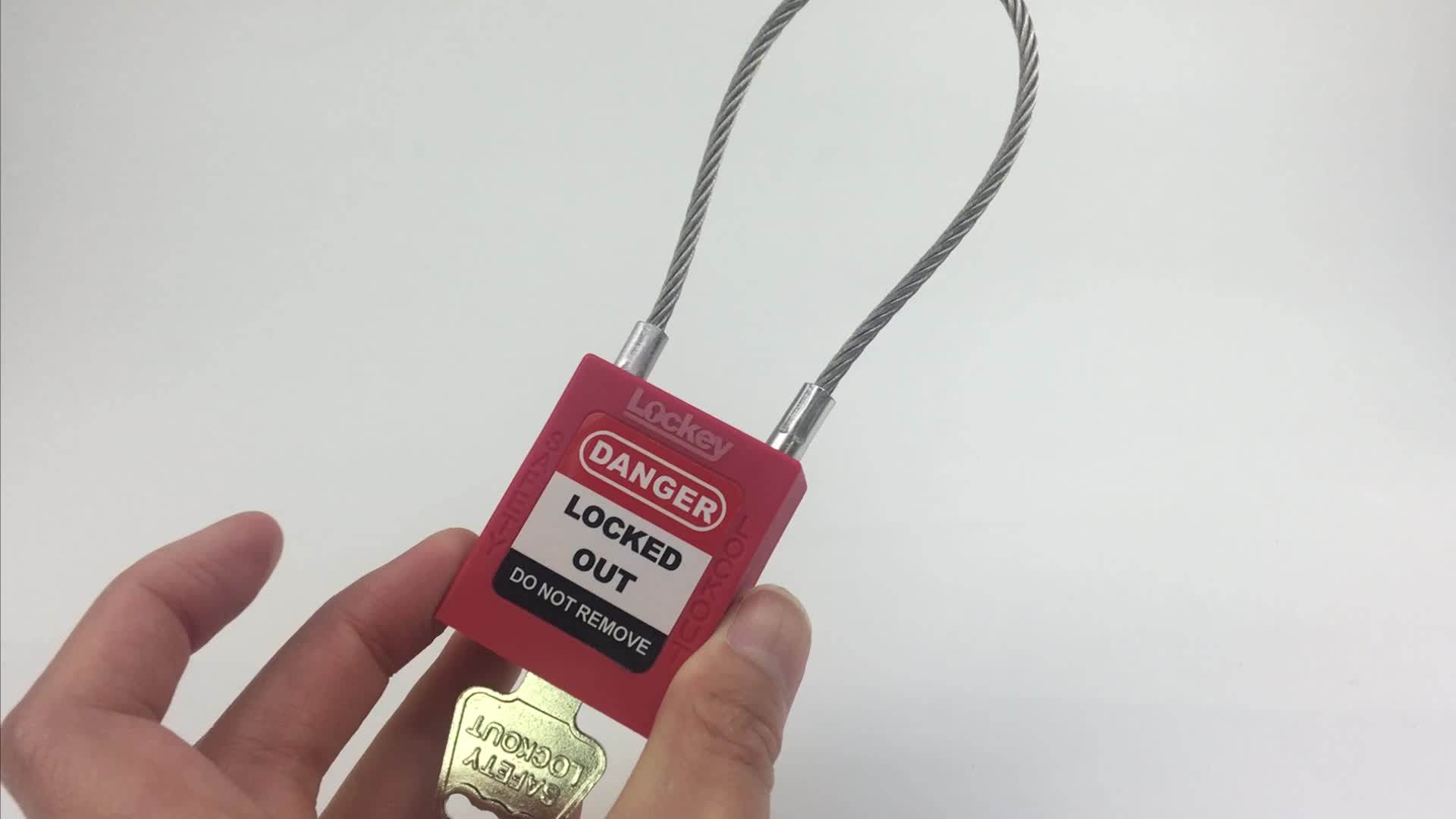
Every year, preventable accidents occur during equipment maintenance—workers injured, operations halted, compliance violated. At the heart of many of these incidents? A missing or poorly executed log book lock out tag out procedure. When hazardous energy isn’t properly controlled, the consequences are severe. A log book LOTO system isn’t just paperwork—it’s a lifeline.
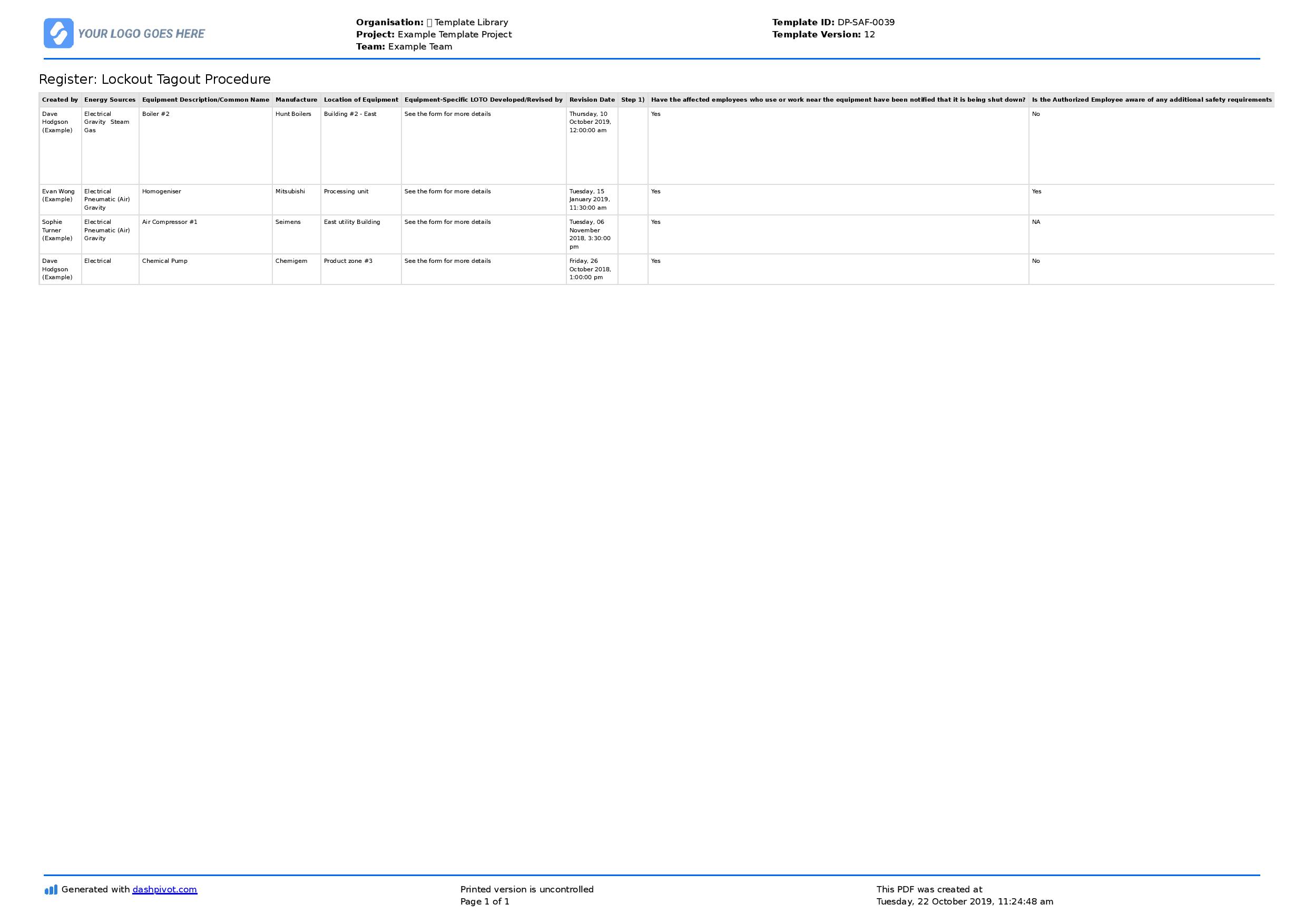
Lock out tag out (LOTO) is a standardized safety process used to isolate energy sources from machinery before maintenance or servicing. The log book component tracks every LOTO event: who locked out equipment, when, why, and when it was safely re-energized. Without it, accountability vanishes, and risks multiply.
This article breaks down why integrating a log book into your LOTO program isn’t optional—it’s essential. You’ll learn how it works, common failures, real-world applications, and how to implement it effectively.
What Is a Log Book in Lock Out Tag Out?
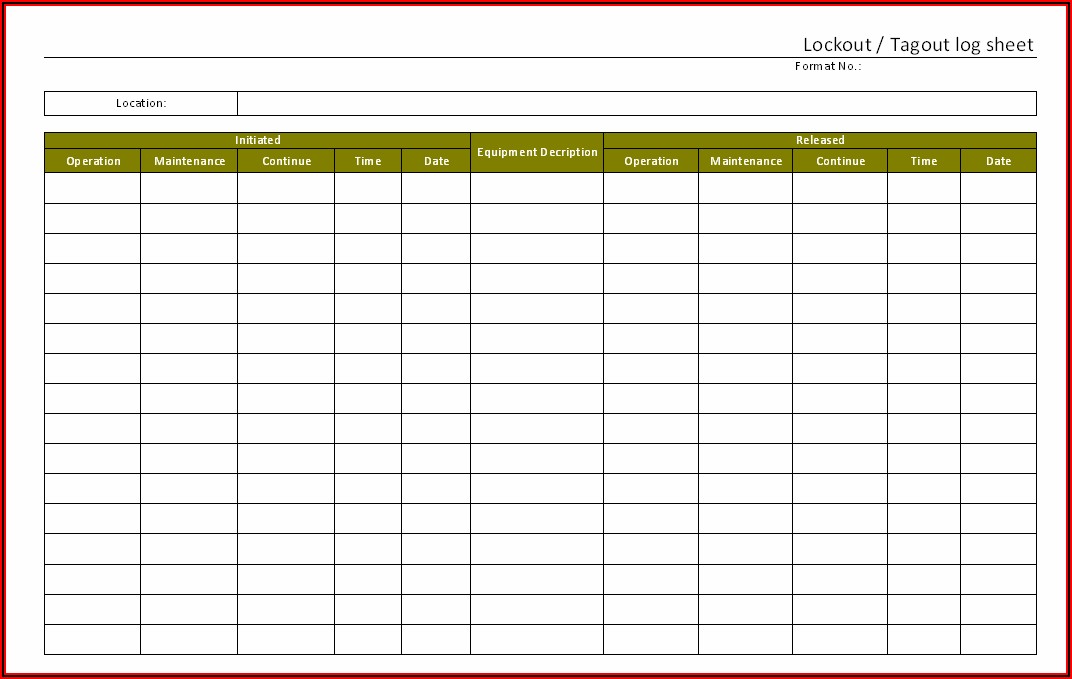
A LOTO log book is a centralized record that documents each instance of energy isolation. It complements physical lockout devices—padlocks, hasps, tags—and ensures transparency across shifts and teams.
Think of it as a legal and operational diary for machine safety. Every entry typically includes:
- Date and time of lockout
- Equipment ID or name
- Employee name and role
- Type of energy isolated (electrical, hydraulic, pneumatic, etc.)
- Reason for servicing
- Lock number used
- Time of re-energization
- Verification signature
This log isn’t just for auditors. It’s used daily by mechanics, electricians, and supervisors to confirm that no one is working on a machine before restart.
Without a log, imagine two technicians working on the same conveyor belt on different shifts. The first locks out the system but doesn’t record it. The second assumes it’s safe to restart—until someone gets hurt.
Why a Log Book Is Non-Negotiable in LOTO
OSHA’s standard 29 CFR 1910.147 mandates documented procedures for controlling hazardous energy. While it doesn’t explicitly require a "log book," it does require:
- Written procedures
- Employee training
- Periodic inspections
- Documentation of each energy control instance
A log book is the most practical way to meet these requirements. Here’s why it’s indispensable:
#### Accountability Across Shifts In 24/7 operations, shifts change, but equipment status doesn’t. A log book ensures that a night technician knows exactly what was locked out by the day crew—and why.
#### Audit and Compliance During an OSHA inspection, verbal assurances won’t suffice. Inspectors demand proof—dates, names, equipment IDs. A well-maintained log book is your best defense.
#### Conflict Prevention Multiple workers often service complex machinery. The log prevents overlapping work, duplicate locks, or accidental re-energization.
#### Root Cause Analysis When an incident occurs, the log provides a timeline. Was the lock removed too early? Was the tag missing? The record helps trace failures and improve processes.
#### Legal Protection In litigation, a consistent log demonstrates due diligence. Courts recognize documented safety efforts as evidence of a proactive safety culture.
Common Log Book LOTO Mistakes (And How to Avoid Them)
Even companies with LOTO programs fail in execution. Here are the most frequent errors—and their fixes.
#### 1. Blank or Incomplete Entries Technicians skip fields or write illegible notes. Fix: Use pre-formatted logs with required fields. Implement digital forms with validation.
#### 2. Shared Log Books for Multiple Machines One log for 20 machines leads to confusion. Fix: Assign dedicated logs per machine or zone. Use color-coded tabs.
#### 3. Delayed Documentation Workers “do it later”—and forget. Fix: Make logging part of the lockout sequence. No log entry = lock not applied.
#### 4. No Verification Step Supervisors don’t review logs daily. Fix: Assign a daily audit role. Use checklists to confirm entries match physical locks.
#### 5. Storing Logs Off-Site If the log book is in the office and the machine is on the floor, it’s useless. Fix: Keep logs at or near equipment. Use weatherproof, wall-mounted holders.
Real-World Use Cases: Where Log Books Save Lives
#### Case 1: Manufacturing Plant Avoids Electrocution At a Midwest automotive plant, a maintenance electrician locked out a 480V motor control center. He logged the action, placed his lock and tag, and began diagnostics. A production supervisor attempted to restart the line during a delay—but checked the log first. Seeing the active lockout, he waited. The technician was still inside the panel. The log prevented a fatal shock.
#### Case 2: Chemical Facility Prevents Pressure Release During a routine valve replacement at a chemical processing unit, a technician isolated a pressurized line. The log showed two simultaneous lockouts: one for mechanical isolation, another for control system disable. A night-shift worker reviewed the log before shift turnover and noticed the second lock wasn’t removed. Further inspection revealed a miscommunication—the second technician hadn’t finished. The log stopped a potential overpressure event.
#### Case 3: Hospital Avoids MRI Incident Even non-industrial environments use LOTO. In a hospital, an MRI machine required service. The bioengineering team locked out the power and cryogen supply. The log was checked by facilities management before any cleaning crew approached the room. Without that record, someone could have disrupted the system during cooldown—risking quench and equipment damage.
These aren’t rare. They’re everyday wins made possible by disciplined logging.
How to Implement a Log Book LOTO System
A strong system combines policy, tools, and culture. Follow this workflow:
#### Step 1: Map Energy Sources Audit every machine. List all energy types: electrical, mechanical, hydraulic, pneumatic, chemical, thermal.
#### Step 2: Create Equipment-Specific Procedures Write step-by-step shutdown, isolation, and verification steps for each asset. Include required PPE and tools.
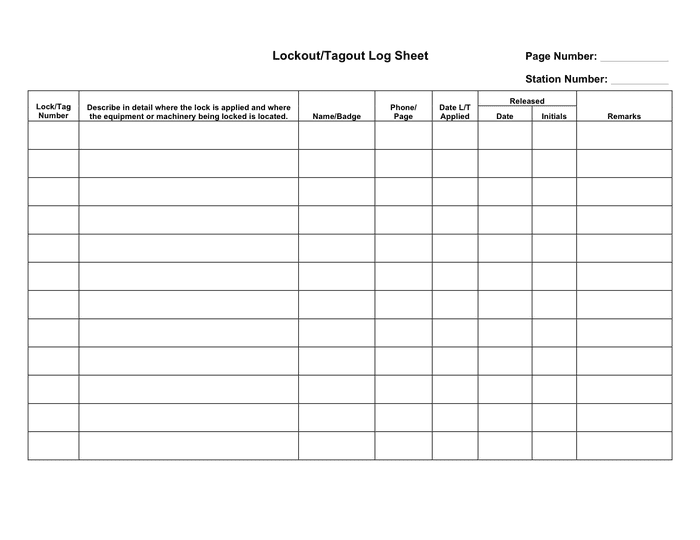
#### Step 3: Design the Log Format Use a consistent template. Digital is ideal; paper works if managed well. Include:
| Field | Required? | Example |
|---|---|---|
| Date/Time In | Yes | 2025-03-15, 08:14 |
| Technician Name | Yes | J. Rivera |
| Equipment ID | Yes | CONV-7B |
| Energy Type | Yes | Electrical, 480V |
| Lock Number | Yes | LK-204 |
| Reason | Yes | Bearing replacement |
| Supervisor Initials | Optional | M.T. |
| Time Out | Yes | 2025-03-15, 14:30 |
#### Step 4: Train Employees Teach everyone—not just mechanics—how to read and use the log. Include contractors.
#### Step 5: Audit Monthly Review logs for gaps, duplicates, or procedural drift. Correct issues immediately.
#### Step 6: Digitize When Ready Move to digital logs for real-time visibility, backups, and integration with CMMS.
Digital vs. Paper Log Books: A Practical Comparison
While paper logs are simple, digital systems offer clear advantages.
| Feature | Paper Log Book | Digital Log Book |
|---|---|---|
| Accessibility | On-site only | Cloud-accessible |
| Searchability | Manual, slow | Instant search |
| Audit Trail | Hard to verify | Timestamped, tamper-proof |
| Integration | None | Works with CMMS, ERP |
| Backup | Physical risk | Auto-sync, cloud storage |
| Real-time Alerts | None | Push notifications |
Best Use Cases: - Paper: Small facilities, low-risk equipment, temporary setups - Digital: High-risk environments, multi-site operations, audited industries
Popular digital tools include: - Fiix – CMMS with built-in LOTO tracking - Dude Solutions – Municipal and facility-focused - MaintainX – Mobile-friendly workflows and checklists - eWorkOrders – Scalable for mid-sized teams - SafetyChain – Food and pharma compliance emphasis
These platforms let technicians scan QR codes on machines, log lockouts via app, and receive alerts when a lock exceeds its expected duration.
The Hidden Cost of Skipping the Log
Some teams treat the log as “extra.” That mindset is dangerous and costly.
Consider: - OSHA fines for non-compliance: up to $15,625 per violation - Downtime from incidents: hours or days of lost production - Workers’ comp claims: Average cost of a lost-time injury: over $40,000 - Reputation damage: Clients audit safety as part of vendor approval
One food processing plant was fined $98,000 after an amputation incident. OSHA’s report cited “lack of documented lockout procedures” as a key factor. The company had locks and tags—but no log. They couldn’t prove training or compliance. The penalty was avoidable.
Make the Log Book Part of Your Safety DNA
A log book lock out tag out system isn’t paperwork for show. It’s the backbone of energy control. It transforms LOTO from a ritual into a repeatable, auditable, and enforceable standard.
- Start today:
- Audit your current LOTO process.
- Identify gaps in documentation.
- Implement a log system—paper or digital.
- Train every employee who interacts with equipment.
- Review logs weekly. Improve monthly.
Safety isn’t about perfection. It’s about diligence. And the log book? It’s where diligence becomes visible.
FAQ
What should you look for in Log Book Lock Out Tag Out: Why It’s Critical for Safety? Focus on relevance, practical value, and how well the solution matches real user intent.
Is Log Book Lock Out Tag Out: Why
It’s Critical for Safety suitable for beginners? That depends on the workflow, but a clear step-by-step approach usually makes it easier to start.
How do you compare options around Log Book Lock Out Tag Out: Why It’s Critical for Safety? Compare features, trust signals, limitations, pricing, and ease of implementation.
What mistakes should you avoid? Avoid generic choices, weak validation, and decisions based only on marketing claims.
What is the next best step? Shortlist the most relevant options, validate them quickly, and refine from real-world results.