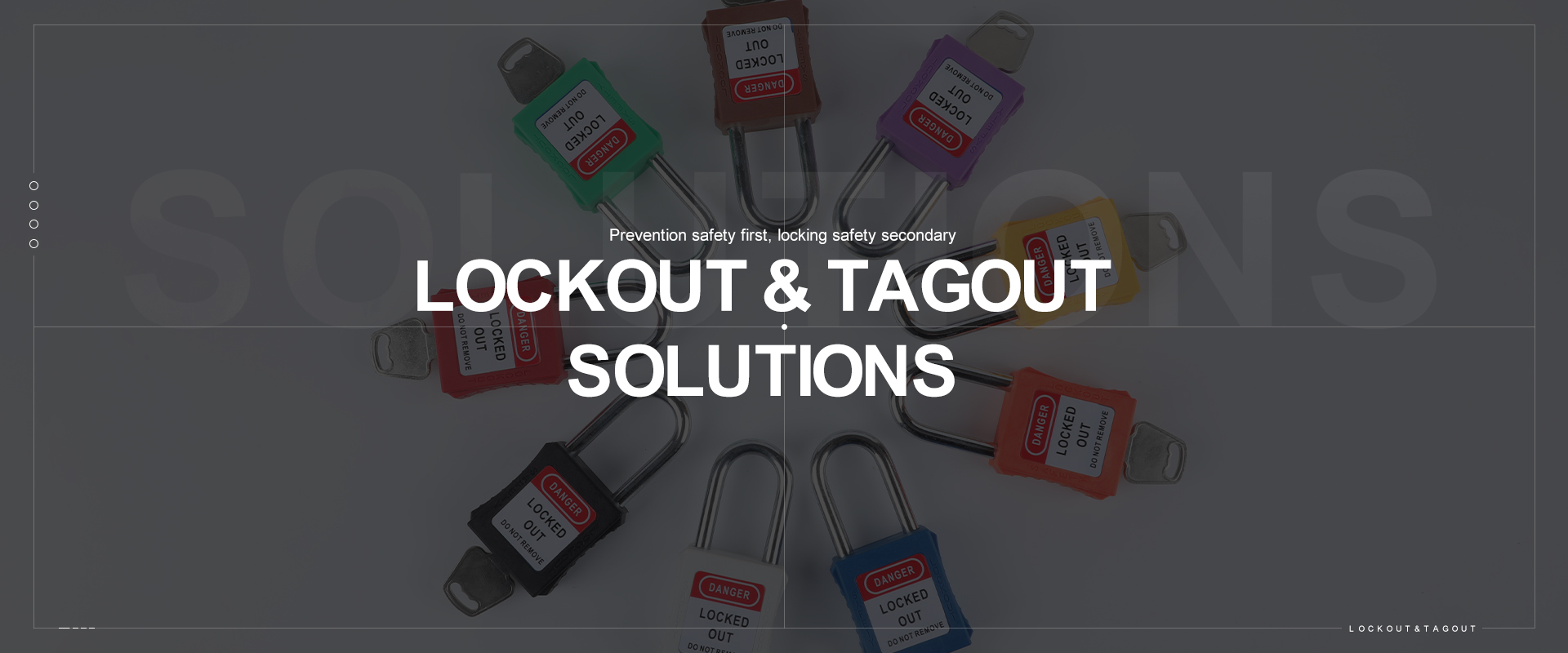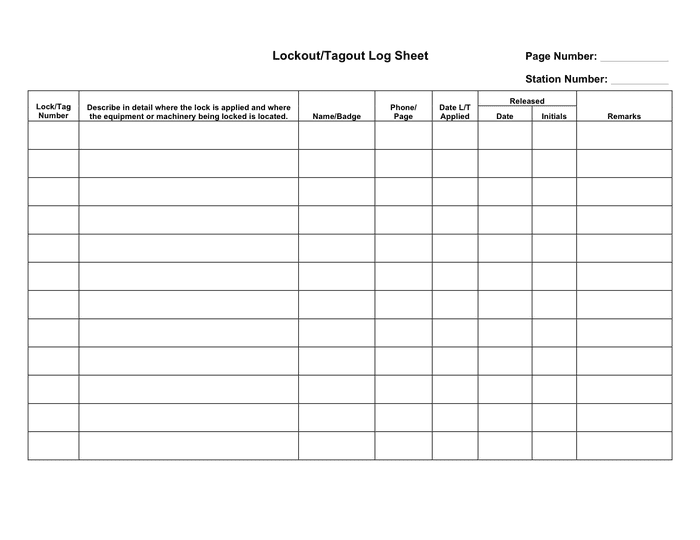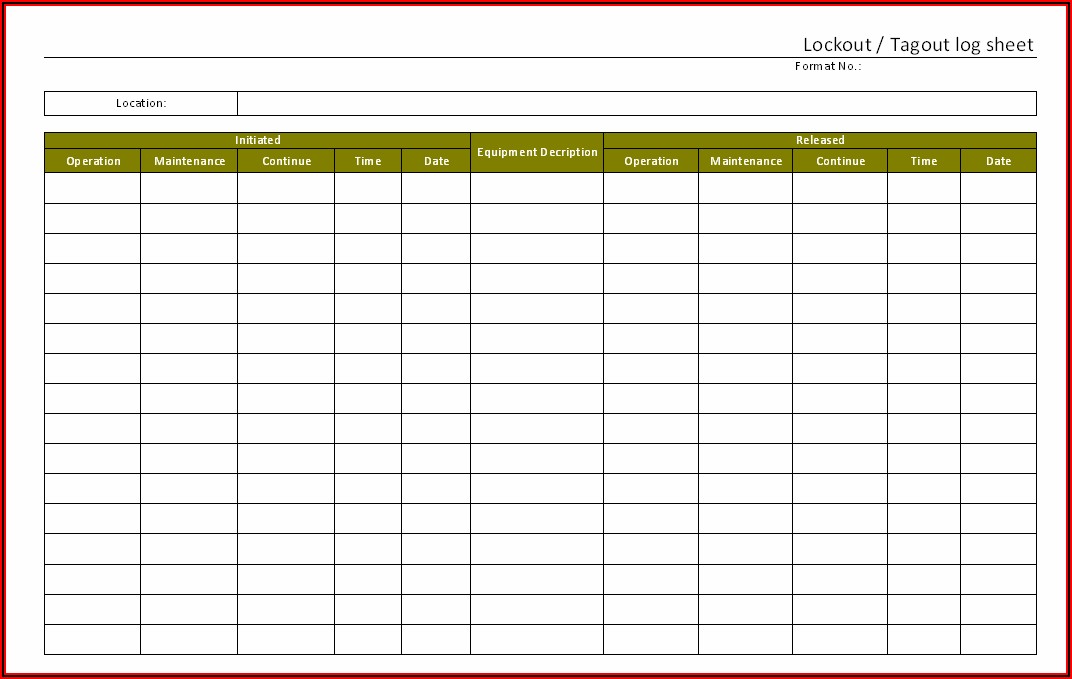
In high-risk industrial environments, standard padlocks often fall short. Valves, levers, and control switches don’t always offer a neat shackle point. That’s where lockout tagout cable locks step in—not as a convenience, but as a precision solution for irregular or widely spaced energy-isolation points. Unlike rigid hasps or padlocks, cable locks offer flexibility without compromising security. They’re becoming standard in facilities managing complex machinery, from chemical plants to conveyor systems, where energy sources are scattered and shapes are unpredictable.
These devices aren't just about flexibility—they’re about compliance. OSHA’s Control of Hazardous Energy standard (29 CFR 1910.147) mandates that machines be rendered inoperative during servicing. Cable locks help meet that requirement where traditional methods fail.
But not all cable locks are created equal. Choosing the wrong type can lead to non-compliance, false confidence, or even accidental re-energization. The real value lies in understanding their design, limitations, and proper application.
How Lockout Tagout Cable Locks Work
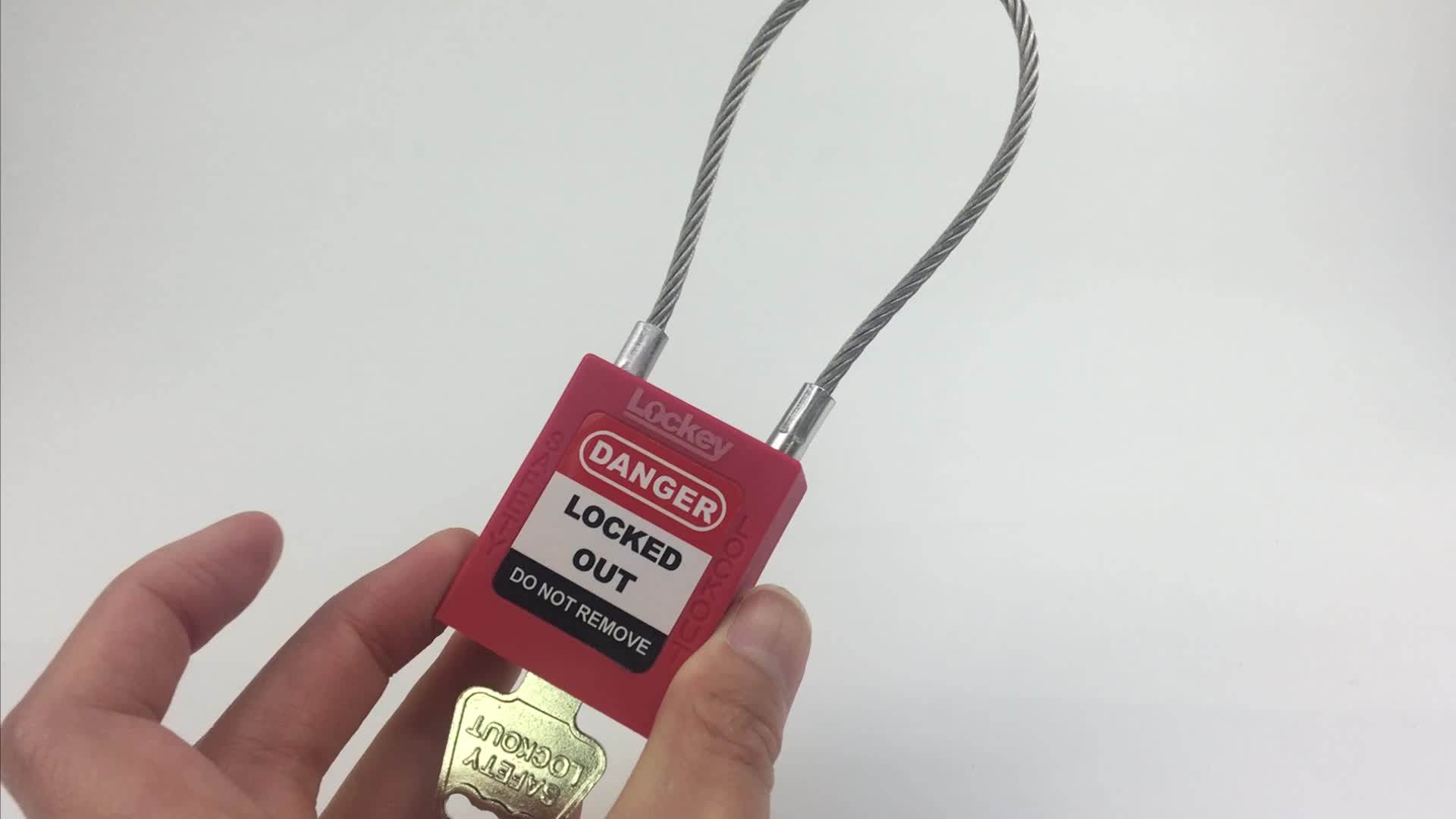
Cable lockout devices consist of a high-tensile steel or braided stainless-steel cable attached to a locking mechanism—typically a heavy-duty padlock body or a universal locking hub. The cable wraps around valves, circuit breaker handles, selector switches, or multiple energy-isolation points and is secured with a lock. A tag attaches to the device, identifying the worker, date, and reason for lockout.
The core principle: once locked, the cable prevents operation or resetting of the machine until the authorized employee removes it.
Unlike standard padlocks that require a fixed hasp, cable locks adapt to odd geometries. For example: - A large gate valve with a handwheel too wide for a padlock can be wrapped and secured with a 36-inch cable lock. - Multiple disconnects on a single machine can be grouped and locked out with one cable and one lock. - Overhead crane controls with no locking point can be secured by looping the cable through the handle and anchoring it.
This adaptability makes them indispensable in dynamic or aging facilities where equipment wasn’t designed with modern LOTO in mind.
Types of Cable Lockout Devices
Not every cable lock fits every situation. Selecting the right type depends on environment, cable length, material, and locking mechanism.
Stainless Steel Cable Locks Ideal for wet, corrosive, or outdoor environments. Stainless steel resists rust and maintains strength in chemical exposure. Common lengths: 12”, 24”, 36”. Used in food processing, wastewater treatment, and offshore rigs.
Coated Steel Cable Locks Feature a plastic or vinyl coating over steel braiding. Offers grip and protects equipment from cable abrasion. Best for painted or sensitive surfaces. Found in automotive plants and electronics assembly.
Universal Cable Lockout Hubs Not a padlock-based system. Instead, the cable feeds into a locking hub that accepts multiple padlocks—used in group lockout scenarios. Each worker applies their personal lock to the hub. The cable stays secured until all locks are removed.
Heavy-Duty Ratchet Cable Locks Include a ratcheting mechanism to tighten the cable and prevent slack. Provides tamper resistance and ensures tension doesn’t loosen over time. Used on large butterfly valves or multi-point disconnects.
Common Applications and Real-World Use Cases
Practical deployment separates effective LOTO programs from paper compliance.

Case 1: Chemical Processing Plant Maintenance on a reactor vessel requires isolating steam, cooling water, and agitation motors. The steam valve is a large handwheel with no locking point. A 30-inch stainless steel cable lock is wrapped around the wheel and secured with a ratchet mechanism. Each energy source is tagged and logged. The cable’s corrosion resistance ensures longevity in the humid environment.
Case 2: Automotive Assembly Line A robotic welding cell has three emergency stops and two power disconnects. Instead of using four separate locks, a universal cable hub with a 48-inch cable loops through all handles. Each technician on the maintenance team applies their padlock to the hub. No one can restart the cell until every individual removes their lock.
Case 3: Food Manufacturing Facility A mixer with a coated stainless steel shaft and handle risks surface damage from bare metal cables. A vinyl-coated cable lock secures the power switch without scratching the food-grade equipment. The coating also improves grip in greasy conditions.
These aren’t theoretical scenarios—they reflect daily challenges in facilities where safety culture hinges on practical, reliable tools.
Top 5 Lockout Tagout Cable Locks (2024 Review)
Choosing the right product means balancing durability, flexibility, and compliance. Here are five top-performing cable lockout devices widely adopted in industry:
| Product | Cable Length | Material | Key Feature | Best For |
|---|---|---|---|---|
| Master Lock 14XDLF | 36" | Coated steel | Universal fit, bright red body for visibility | General maintenance, HVAC |
| Grace Industries CI-24-SS | 24" | Stainless steel | Fully corrosion-resistant, no coating to degrade | Chemical, marine, outdoor |
| Safeguard LSC-36 | 36" | Steel with PVC coating | Ratcheting tensioner for zero slack | High-vibration environments |
| Bernard LTC-48 | 48" | Stainless steel | Long reach for multi-point isolation | Large valves, group lockout |
| Spartan Safety SL-CAB36 | 36" | Steel with nylon sleeve | Affordable, OSHA-compliant, durable | Small facilities, budget-conscious teams |
Each of these integrates seamlessly into existing LOTO procedures. The Grace Industries model is often preferred in harsh conditions due to its all-metal construction. The Safeguard LSC-36 stands out for its ratcheting feature, which prevents accidental loosening—a common failure point in long-duration lockouts.
Installation Best Practices and Mistakes to Avoid
Even the best cable lock can fail if applied incorrectly. Here’s how to get it right:
Do: - Inspect the cable for fraying, kinks, or corrosion before each use. - Ensure the cable is taut with no slack that could allow movement. - Use a tag with legible handwriting or printed text—include name, department, and time of lockout. - Pair the cable lock with a hasp or lockout block when securing multiple devices. - Train all employees on proper wrapping techniques for different equipment types.
Don’t: - Reuse damaged cables—even minor fraying compromises strength. - Wrap loosely around a handle, assuming the lock alone prevents motion. - Use a coated cable in high-heat areas where the coating could melt. - Allow the cable to dangle where it can be tripped over or snagged. - Assume one cable fits all—match length and material to the application.
A common mistake? Using a 12-inch cable on a large valve and forcing it, which creates stress points. Always size up. It’s safer and more effective to use a longer cable properly than a short one under strain.
Compliance, Audits, and the Role of Cable Locks in LOTO Programs
OSHA doesn’t explicitly mandate cable locks—but it does mandate effective energy isolation. If your equipment can’t be secured with standard methods, cable locks become a compliance necessity, not an option.

During audits, inspectors look for: - Evidence of employee training on cable lock use - Tags that are durable and information-rich - Locks that physically prevent operation - No signs of workarounds or bypassed procedures
Facilities using cable locks should document their application in the energy control procedure. For example: “Valve V-204 on Reactor 3 shall be isolated using a 36” stainless steel cable lock, tagged with the technician’s ID and start time.”
Additionally, cable locks must be assigned to individual employees—no shared locks. Each worker uses their own lock and key, ensuring personal accountability.
Limitations and When Not to Use Cable Locks
Cable locks aren’t universal. They have clear boundaries:
- Not for high-torque applications: If the valve or handle requires significant force to move, a cable may stretch or slip. Use a valve lock or lever lock instead.
- Not a substitute for lockout boxes: When multiple energy sources exist, a group lockout box with a hasp is safer than relying solely on a cable.
- Avoid in extreme heat: Coated cables can degrade above 200°F. Use all-metal versions or alternative methods.
- Not for electrical arc flash protection: While they isolate energy, cable locks don’t meet NFPA 70E requirements for electrical safety on their own. Pair with verified disconnect procedures.
Understanding these limits prevents overreliance and keeps safety systems robust.
Choose the Right Cable Lock—Then Use It Right
Lockout tagout cable locks solve a critical gap in energy isolation. They bring flexibility without sacrificing security. But their real power emerges only when matched to the right application and used correctly.
Start by auditing your equipment: where do padlocks fail? Where are isolation points irregular or scattered? Identify those spots and deploy cable locks with the proper length, material, and locking mechanism.
Train your team not just to use them, but to inspect, tension, and tag them properly. Integrate them into written LOTO procedures. And remember—no tool replaces vigilance. A cable lock is only as strong as the process behind it.
Equip your team with the right tools, reinforce the right habits, and turn energy isolation from a checklist item into a culture of safety.
Frequently Asked Questions
Can cable lockout devices be used for group lockout? Yes—universal cable hubs allow multiple padlocks to secure a single cable, enabling group lockout during team maintenance.
Are coated cable locks OSHA-compliant? Yes, as long as they effectively prevent machine operation and are properly tagged and maintained.
How often should cable locks be inspected? Inspect before each use. Replace immediately if fraying, kinking, or corrosion is present.
What length cable lock do I need? Measure the circumference of the isolation point plus clearance. Most facilities use 24” to 36”; longer cables (48”) suit multi-point or large valves.
Can cable locks be used on electrical disconnects? Yes, if the disconnect handle can be secured without interfering with the mechanism. Always verify the disconnect is de-energized first.
Do cable locks come with tags? Some kits include tags; others require separate purchase. Always use a durable, weather-resistant tag with employee details.
Can cable locks be cut with bolt cutters? High-tensile steel resists standard bolt cutters, but determined tampering is possible. Combine with procedural controls and supervision.
FAQ
What should you look for in Lockout Tagout Cable Locks: Secure, Durable, and Essential? Focus on relevance, practical value, and how well the solution matches real user intent.
Is Lockout Tagout Cable Locks: Secure, Durable, and Essential suitable for beginners? That depends on the workflow, but a clear step-by-step approach usually makes it easier to start.
How do you compare options around Lockout Tagout Cable Locks: Secure, Durable, and Essential? Compare features, trust signals, limitations, pricing, and ease of implementation.
What mistakes should you avoid? Avoid generic choices, weak validation, and decisions based only on marketing claims.
What is the next best step? Shortlist the most relevant options, validate them quickly, and refine from real-world results.